History around Schenectady
Upstate New York History.
Thursday, January 05, 2017
Wednesday, January 04, 2017
Tuesday, January 03, 2017
Monday, January 02, 2017
Sunday, February 20, 2011
Wednesday, January 26, 2011
Last night John Sylvester and 12 ALCO Century 630's saved an eastern railroad $1,022,400
From the October, 1967 issue of Trains Magazine.
Archive # 27,003.
Labels: Advertisement, American Locomotive Company
Thursday, January 20, 2011
Growing with Schenecatdy... American Locomotive Company
Wednesday, January 12, 2011
2 Plants from one
Wednesday, November 17, 2010
97% availability. That's the record of ALCO Century 424's on The Belt of Chicago.
When a railroad handles over 1.9 million cars a year, there’s no time for locomotive downtime. That’s why The Belt Railway Company of Chicago relies on Alco Century’s to handle an important share of their traffic.
Producing 2400 hp for traction, the 424's are The Belt’s most powerful single units. And their heavy weight allows them to develop and utilize their full-rated horsepower throughout their entire operating speed range.
This feature gives The Belt added drag power for heavy loads of coal, while still providing sufficient speed for their transfer operations. Versatility and endurance are built-in features of all Alco Century locomotives. Powered by the proved and improved Model 251 diesel engine, they deliver dependable power for any railroad. Good reason why The Belt has reordered more Century 424's.
But don't take our word for it. Ask any railroader who's in the know on Century motive power. Then contact us for complete data on the full line of Century locomotives. Alco-only domestic manufacturer offering a choice of three power transmission systems: AC, DC and Diesel-Hydraulic.
ALCO PRODUCTS, INC.
Dept. 315-23, Schenectady, N. Y. 12305
A Century 424 couples to an 80-car train of mixed freight in The Belt Railway's Clearing Yards.
Producing 2400 hp for traction, the 424's are The Belt’s most powerful single units. And their heavy weight allows them to develop and utilize their full-rated horsepower throughout their entire operating speed range.
This feature gives The Belt added drag power for heavy loads of coal, while still providing sufficient speed for their transfer operations. Versatility and endurance are built-in features of all Alco Century locomotives. Powered by the proved and improved Model 251 diesel engine, they deliver dependable power for any railroad. Good reason why The Belt has reordered more Century 424's.
But don't take our word for it. Ask any railroader who's in the know on Century motive power. Then contact us for complete data on the full line of Century locomotives. Alco-only domestic manufacturer offering a choice of three power transmission systems: AC, DC and Diesel-Hydraulic.
ALCO PRODUCTS, INC.
Dept. 315-23, Schenectady, N. Y. 12305
A Century 424 couples to an 80-car train of mixed freight in The Belt Railway's Clearing Yards.
From Trains magazine, September, 1966.
Archive # 24,648.
Labels: American Locomotive Company
Friday, November 12, 2010
ALCO Picnic Photographs
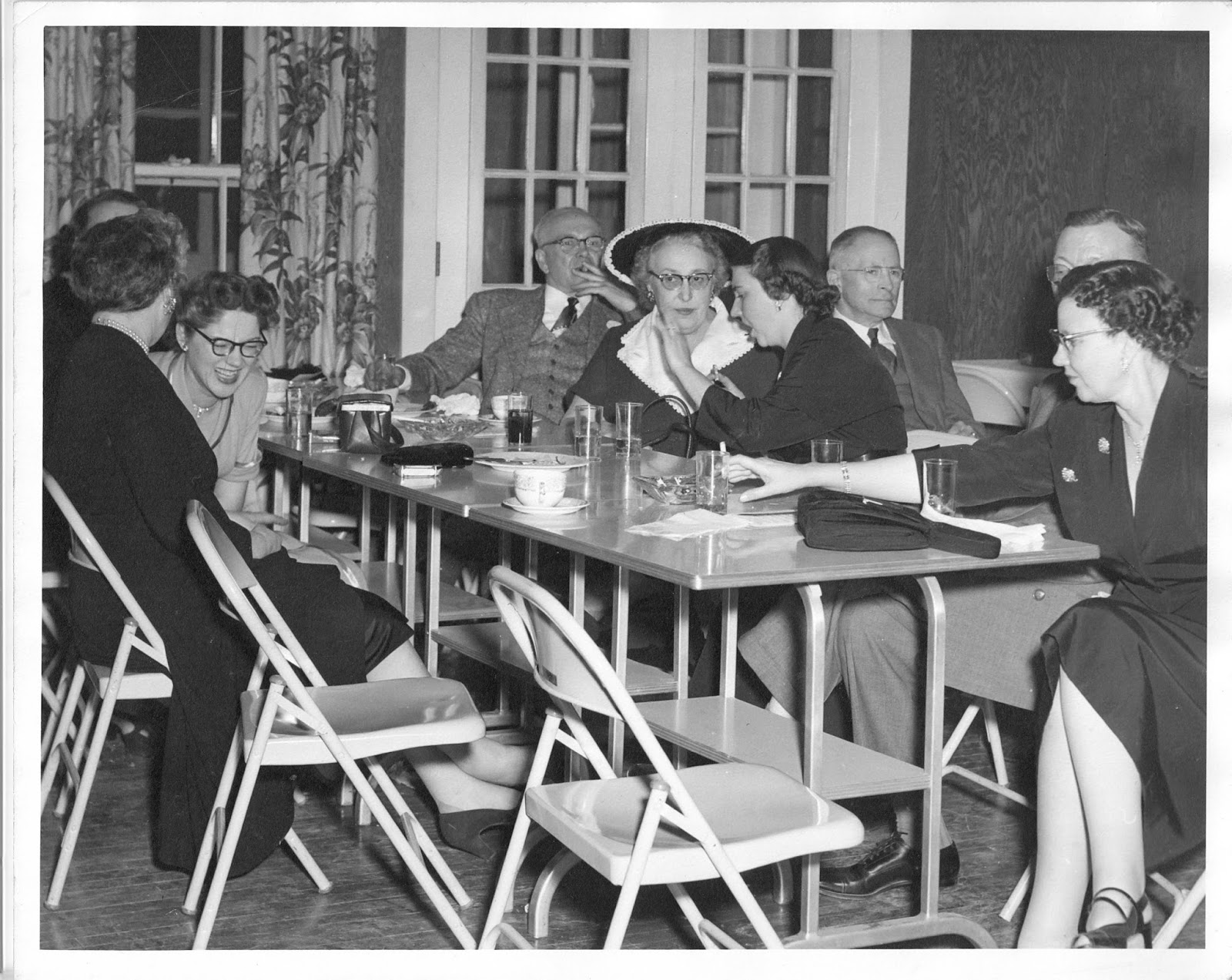
I believe that these photographs are from an American Locomotive Company event. My grandfather Edward Bradford is in most of them. If you know the name of any one else, please contact me or add a comment.
(Edward Bradford on left)
(Edward Bradford third from left, back row)
(Edward Bradford smoking pipe)
(Edward Bradford standing)
Archive ID 24,503 - 24,508.
Labels: American Locomotive Company
Sunday, October 17, 2010
American Locomotive Company, Catalog No 10051
AMERICAN LOCOMOTIVE COMPANY
Light Locomotives
THE Locomotives described and illustrated in this catalog include only those best adapted to the work of contractors rolling mills, industrial plants, mines, logging roads, plantations, and others needing small independent motive power units.
For service consisting mainly of short runs at low speeds, where ability to start and reverse quickly is of first importance, the entire weight should be carried on driving wheels. For longer runs at higher speeds, leading and trailing wheels are recommended to improve riding qualities, guide locomotives around curves, minimize derailments, and reduce flange wear.
The track gage, wheel diameter, cab style, tank capacity, boiler pressure, etc., may be changed to suit working conditions as well as the wishes of the purchaser; grates and draft appliances arranged to suit fuel and with minor changes fuel oil burning equipment may be substituted.
The designs illustrated were carefully prepared by competent engineers who have specialized on this class of locomotive design.
Materials entering into construction meet all recognized requirements for inspection and testing. The use of a complete set of gages, templates, and jigs insure uniformity and interchangeability of corresponding parts for engines of same type and size, enabling the builder to furnish the repair parts on short notice. The workmanship of each part is carefully examined and tested by an efficient corps of inspectors, and when completed each engine is subjected to a running test under steam before leaving the company's works.
Light Locomotives
THE Locomotives described and illustrated in this catalog include only those best adapted to the work of contractors rolling mills, industrial plants, mines, logging roads, plantations, and others needing small independent motive power units.
For service consisting mainly of short runs at low speeds, where ability to start and reverse quickly is of first importance, the entire weight should be carried on driving wheels. For longer runs at higher speeds, leading and trailing wheels are recommended to improve riding qualities, guide locomotives around curves, minimize derailments, and reduce flange wear.
The track gage, wheel diameter, cab style, tank capacity, boiler pressure, etc., may be changed to suit working conditions as well as the wishes of the purchaser; grates and draft appliances arranged to suit fuel and with minor changes fuel oil burning equipment may be substituted.
The designs illustrated were carefully prepared by competent engineers who have specialized on this class of locomotive design.
Materials entering into construction meet all recognized requirements for inspection and testing. The use of a complete set of gages, templates, and jigs insure uniformity and interchangeability of corresponding parts for engines of same type and size, enabling the builder to furnish the repair parts on short notice. The workmanship of each part is carefully examined and tested by an efficient corps of inspectors, and when completed each engine is subjected to a running test under steam before leaving the company's works.
Download from archive.org
Archive # 20,377.
Saturday, October 16, 2010
American Locomotive Company, Pamphlet No. 10044, Panama Pacific International Exposition
AMERICAN LOCOMOTIVE COMPANY
STANDARD FOUR-WHEEL TANK LOCOMOTIVES
FOR CONTRACTORS, QUARRIES, MINES AND INDUSTRIAL PLANTS
The four-wheel connected saddle tank locomotives exhibited, which are illustrated on pages 6 and 8, represent the American Locomotive Company's new standard designs for Contractors, Quarry, Mine, Industrial and other special service. On page 10 is shown a table giving the different sizes of this type of locomotive which are kept constantly in stock at our Works.
The four-wheel type of locomotive, with all the weight on the driving wheels, gives the greatest amount of hauling power for a given weight of engine; also a short rigid wheel base adapted to curves of very short radius. For these reasons, this type of locomotive is almost universally accepted as the most satisfactory for these special classes of service, where light rails, poor roadbed, rough and uneven track and sharp curves are the conditions which prevail.
Length of service, proportion of time ready for use, and work performed determine the value of a locomotive. Delays affect the whole work. To avoid delays, locomotives
must be reliable and always ready for service.
With these points in mind we have designed and built our small locomotives by a unique system of construction. They are not made as a whole, but are assembled from stock parts made to accurate gauges. Every operation is done in a carefully prepared jig.
With this system every part must be so accurately made as to fit every other locomotive of the same size and type.
We can therefore make prompt shipment of either a complete locomotive or any part. This method avoids long delays when parts wear out and also enables a user to keep on hand parts liable to wear in service with positive assurance that each part will fit.
Spare parts are available at Chicago, San Francisco and our Works at Paterson, N. J.
With slight changes any of these locomotives can be built suitable for oil fuel.
Every piece of material must conform to the same specifications required for 200-ton locomotives, and only the best materials are used.
Each locomotive is tested under its own steam before delivery.
Back of each design is the experience of over eighty years of continuous locomotive building and the construction of over 55,000 locomotives.
STANDARD FOUR-WHEEL TANK LOCOMOTIVES
FOR CONTRACTORS, QUARRIES, MINES AND INDUSTRIAL PLANTS
The four-wheel connected saddle tank locomotives exhibited, which are illustrated on pages 6 and 8, represent the American Locomotive Company's new standard designs for Contractors, Quarry, Mine, Industrial and other special service. On page 10 is shown a table giving the different sizes of this type of locomotive which are kept constantly in stock at our Works.
The four-wheel type of locomotive, with all the weight on the driving wheels, gives the greatest amount of hauling power for a given weight of engine; also a short rigid wheel base adapted to curves of very short radius. For these reasons, this type of locomotive is almost universally accepted as the most satisfactory for these special classes of service, where light rails, poor roadbed, rough and uneven track and sharp curves are the conditions which prevail.
Length of service, proportion of time ready for use, and work performed determine the value of a locomotive. Delays affect the whole work. To avoid delays, locomotives
must be reliable and always ready for service.
With these points in mind we have designed and built our small locomotives by a unique system of construction. They are not made as a whole, but are assembled from stock parts made to accurate gauges. Every operation is done in a carefully prepared jig.
With this system every part must be so accurately made as to fit every other locomotive of the same size and type.
We can therefore make prompt shipment of either a complete locomotive or any part. This method avoids long delays when parts wear out and also enables a user to keep on hand parts liable to wear in service with positive assurance that each part will fit.
Spare parts are available at Chicago, San Francisco and our Works at Paterson, N. J.
With slight changes any of these locomotives can be built suitable for oil fuel.
Every piece of material must conform to the same specifications required for 200-ton locomotives, and only the best materials are used.
Each locomotive is tested under its own steam before delivery.
Back of each design is the experience of over eighty years of continuous locomotive building and the construction of over 55,000 locomotives.
Archive # 20,314.
Labels: American Locomotive Company, Panama Pacific International Exposition, Steam Locomotive
Thursday, June 03, 2010
Schenectady's Nonagenarian Industry, 1848 - 1938
This book was put out by the American Locomotive Company in 1938 to commemorate the 90th Anniversary of the founding of the locomotive industry in Schenectady.
Monday, March 29, 2010
No. 3028 Comes Home and is Officially Received
View this document http://www.nyysa.com/archive/code/detail.php?a=20318&ff=0&sl=10&rc=1&bb=1
Labels: American Locomotive Company


